Meet my Roomba! iRobot’s robot vacuum cleaner. While robot vacuums have been around for quite some time, I’ve never had the opportunity to test one until now. Frankly, I’ve had my doubts about how well they can keep the place clean, so I was looking forward to putting Roomba through his paces.
What’s in the box: iRobot Roomba 880
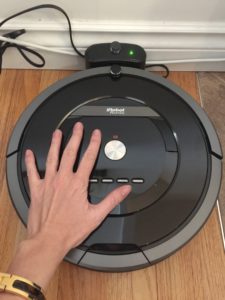
Also in the box are a couple of devices that look like small towers. One of these is the “home base” station which will charge your Roomba. The other devices are what’s called virtual walls. More on those later. There’s also an extra filter and a remote control.
Set up
Using the iRobot Roomba 880
The Roomba can be used at any moment simply by pushing the ‘clean’ button in the center of the vacuum. The robot will back away from its base station and begin cleaning in a somewhat hard to follow but linear pattern. The robot learns its way around furniture and is smart enough to back away from stairs. The Roomba will clean an entire floor of your house and then return to his base station when the battery begins to run low.
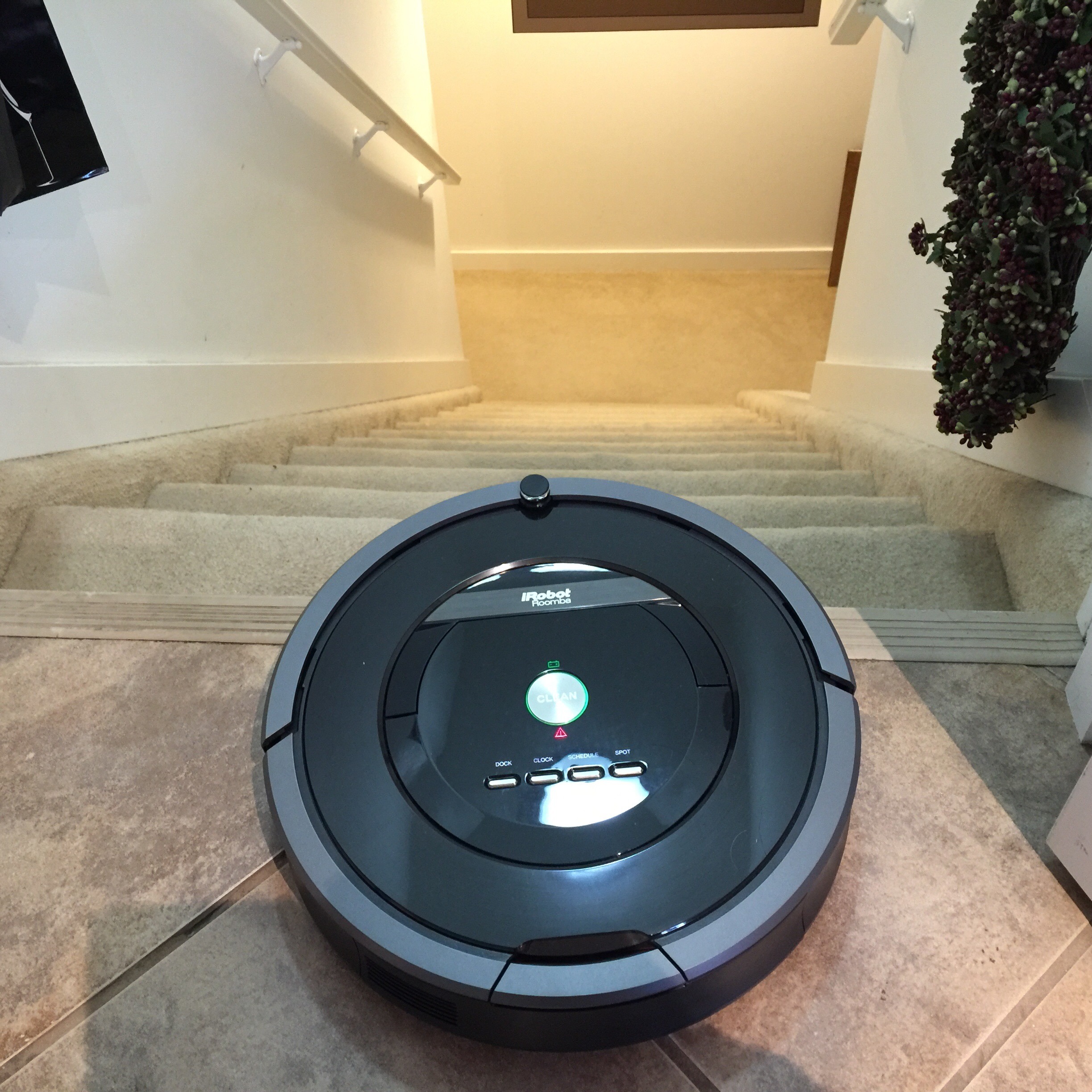
While I was using the device, I had no problem getting the entire main floor of my house (about 1000 sq ft) swept on a single charge. The robot would go from room to room and find his way in through doorways and around beds or furniture easily. While the robot is short enough to go under beds and furniture, my beds sit directly on the floor, so I was unable to tell if the robot would automatically head under the bed to sweep up. However he did certainly sweep underneath all the other furniture in my house, something I’m glad I don’t have to do!
Roomba also has a ‘spot clean’ mode, so if you spilled something on the floor or have a particularly dirty or dusty area, you can bring the Roomba over and select ‘spot clean’, and the device will begin a series of swirl patterns and sweep up everything in that single area. I decided to test this feature by pouring some flour on the floor and then bringing the Roomba over to attack it.
Spilling stuff to test Roomba’s Spot Cleaning
Getting a spot cleaning done is a simple as pressing the ‘spot’ button on the top of the robot. Roomba immediately went to work, and started in a series of small circles that got larger and larger. In no time, all of the flour was cleaned up. As you’ll see in the video I made, I have some grout missing from spots on our tile floor, and while the Roomba did not have the suction power to get the flour out of those deeper crevices, he was able to get every last bit of flour from the tile surface. I was pretty impressed. While more suction would be nice, I also recognize that not everybody has giant grout gouges in their floor. So for most applications I think the spot cleaning would work great.
But could Roomba handle heavier spills like oatmeal, breadcrumbs, or even peanuts?
It was back to the test kitchen to find out. With this test, again the Roomba performed better than I expected. After initially rolling over top of the peanuts on the first circle, Roomba started scooping them up easily. The oatmeal and the breadcrumbs were no problem. In the end, my poorly grouted kitchen being what it is, the only remnants after one single rumba cycle were a lone peanut, and some stray oatmeal flakes deep in the grout holes. I ran a second spot clean cycle, and any additional bits were picked up. I did still need the broom and the dustpan for those deep grout cracks, but if you think about it, if you’re sweeping the floor as your regular method of cleaning, you still have to work to get down in any cracks or crevices. To see how Roomba performed, watch the video version below.
Schedule your iRobot 880 housekeeper!!
[youtube https://www.youtube.com/watch?v=toM4Uld9f6U]
No more pet hair tumbleweeds
I feel like the amount of pet hair in our home was drastically reduced to the point of being invisible. While normally my husband and I would have to use a Swiffer or the vacuum to pick up dog hair tumbleweeds a few times a week, with the Roomba, that was just no longer necessary. I think the Roomba would be ideal for multi pet households where a lot of pet hair is a concern.
Will it upset your pet? Probably not. Have you seen the video of a car riding the Roomba? Neither my dog nor my neighbor’s dog were bothered whatsoever by the robot. The Roomba even bumped into my dog one day while she was laying on the rug Roomba wanted to clean, and while she was a bit miffed, it was just a gentle push and then the Roomba moved off in a different direction. So it’s good to know that even if you have a lazy dog who won’t get up, the Roomba will just clean around him and not hurt him.
Cornering with the iRobot Roomba
 Roomba will get around and under things where the pet hair tends to collect, like underneath chairs or in the hallways. And the robot even did a good job of getting into tighter spaces and corners, however his round shape means he can’t get into them perfectly. With that said, the tiny brushes that extend from the vacuum do increase the robot’s reach into corner areas. Overall I was not unhappy with how the robot was able to clean, and the spaces he was able to get into.
Clean shag rugs too!?
One of the neat features of the iRobot Roomba is the ability to set up virtual walls and light houses. A virtual wall will allow you to block the vacuum from entering certain rooms or areas. In my bungalow, I found this unnecessary, since if I did not want the robot in certain rooms, I would just shut the door. However this would work very well for wide open concept homes where you only perhaps want the robot to focus on the kitchen, and stay out of the children’s play area. You simply set the virtual wall to create a border where the robot shall not pass.
With a lighthouse, the opposite happens; lighthouse placement will allow Roomba to specifically target certain rooms he might not otherwise get into. For example if you’re cleaning your main family room where the Roomba has his docking station, but also want to make sure he gets the playroom, or the bedroom, placing a virtual lighthouse at their doorway will ensure that he visits those two rooms after his initial room clean. Of course this is also subject to battery life.
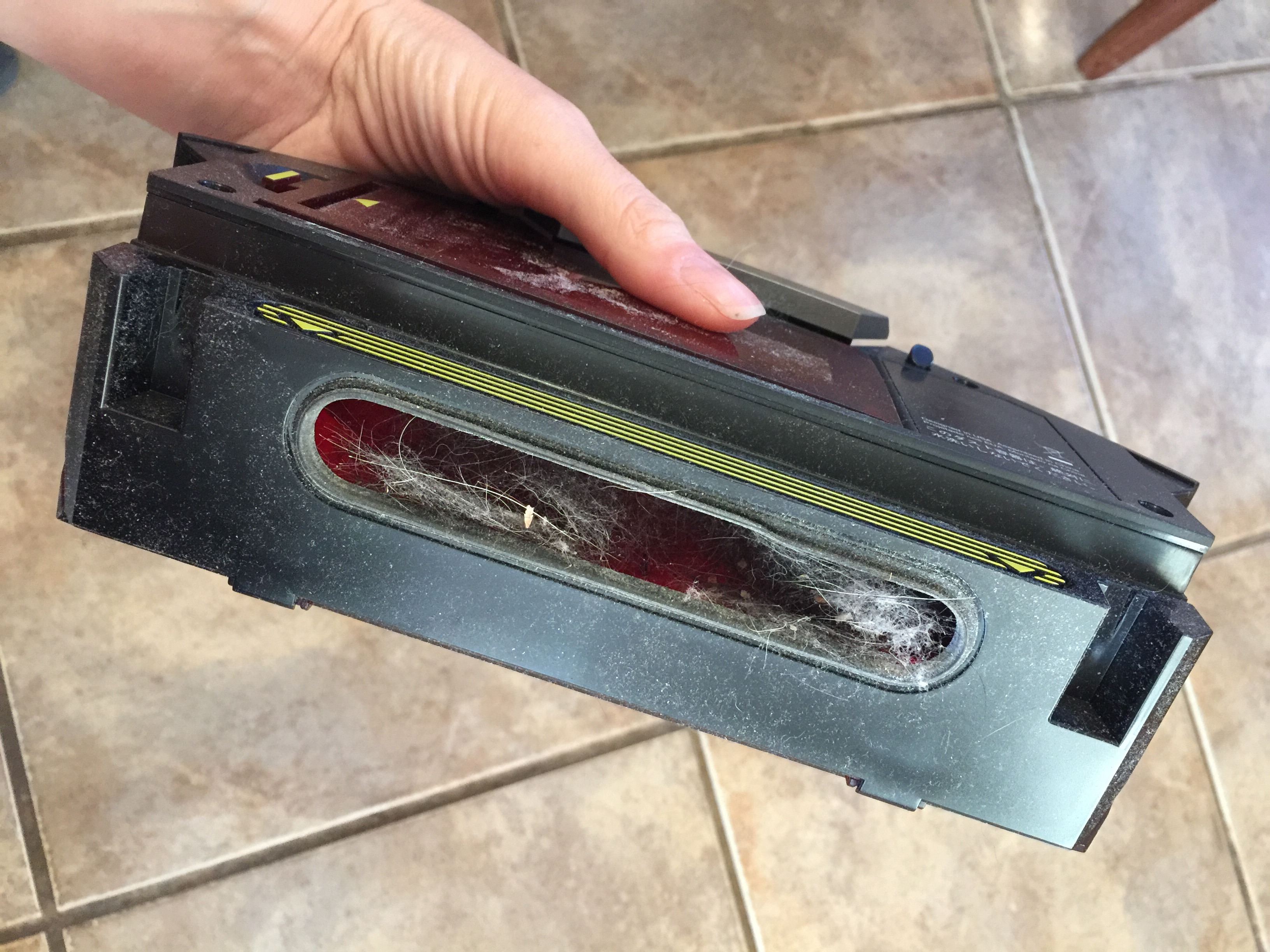
Keeping the Roomba’s canister clean and emptying it regularly is important to helping your robot function well. iRobot recommends you empty the dustbin after each use. While I tried to do this, sometimes I forgot. Fortunately the Roomba will let you know if the dustbin is too full to continue. I was able to get about three days worth of sweeps on my entire main floor before it would fill up.
I did feel like cleaning out the canister was rather awkward, since it has a very narrow opening at one end of the canister. It’s hard to get pet hair out of it, unless you reach in with your fingers and try and pinch it out. Heavier dust or objects like the peanuts I used in my tests will fall out easily, but lighter debris needs to be shaken free. If I were to design a new room by canister, it would have a wider mouth for ease of cleaning all the junk out. As it it, you’re probably going to get your hands dirty.